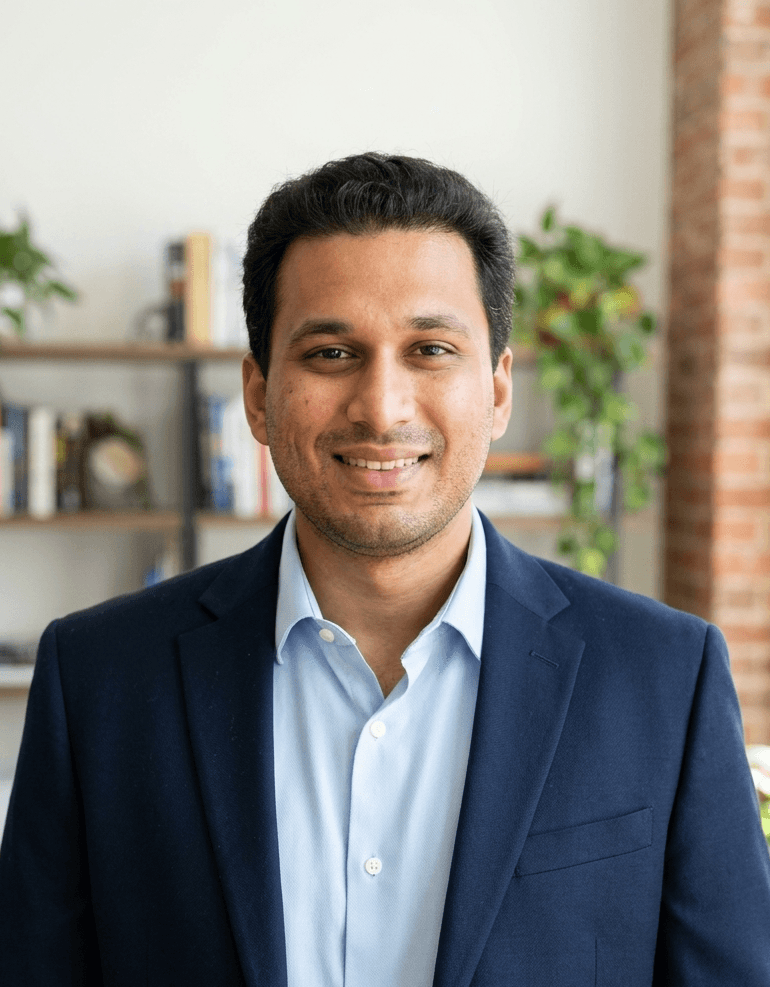
In 2022, Akshay built upskillfinder.com around one hypothesis: stacking top-tier cybersecurity certifications was the cleanest signal of competence the industry had. By 2024, he had 30 of them: OSCP, CEH, the full stack. The plan was to build an authority profile so strong that no recruiter, client, or enterprise customer could dismiss it.
Then he found the proxy-ring ads. The same credentials, the ones he'd spent months earning, were available to order from syndicated proxy networks. Pay $200 after the test clears. The proxy sits the exam remotely. The “candidate” gets coffee. Full credential delivered. Zero skill transferred.
The certification had become a liability. His hard-earned OSCP was indistinguishable from one bought for $200. Every signal he'd built was now equally accessible to someone who had never opened a terminal.
At Cornell University's Startup Studio in November 2025, Akshay found his co-founders. Divya had spent their career red-teaming AI systems, including the exact overlay architectures now being sold as cheating tools. Sanjay had encountered the proxy-ring economy first-hand while preparing for a graduate admissions exam.
The common thread wasn't the specific failure mode. It was the layer at which every existing solution tried to stop it: the browser, the webcam, the application. None of it was close to where the cheating actually happened.
They built Aiseptor at the network layer instead.